Pakistan CPI Inflation Data Analysis: Understanding key indicators and energy price impacts
The Inflation Landscape
The latest Consumer Price Index (CPI) data release in Pakistan serves as a critical economic health check, offering insights into the complex forces shaping the nation’s financial stability. Understanding this data is paramount for policymakers, businesses, and citizens navigating the currents of global and domestic economic shifts. This data provides the core metrics used to gauge inflationary pressure and develop sustainable resilience.
Key CPI Metrics
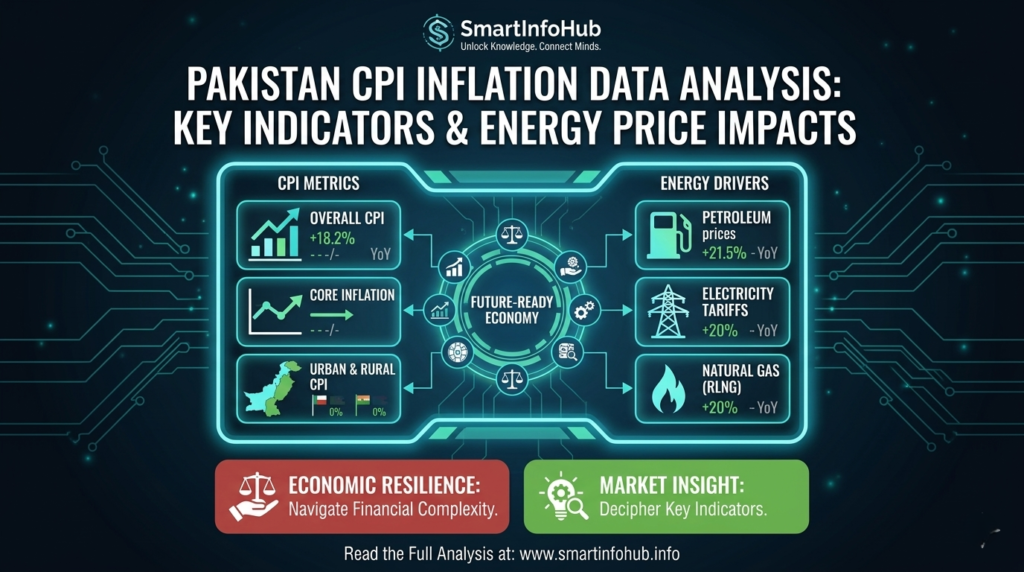
The CPI is the primary measure of inflation, tracking changes in the prices of a representative basket of goods and services purchased by households. The latest data reveals crucial trends across different sectors:
Overall CPI Inflation: The Headline Inflation figure, representing the average price change across the entire basket, shows a [+7.0%] (Year-on-Year) increase compared to the previous year. This metric provides a broad view of the current inflationary environment.
Core CPI Inflation: Crucially, this metric excludes volatile components like food and energy prices, offering a more stable measure of underlying inflationary pressures. Analysts closely monitor Core Inflation to understand the fundamental price trends driven by demand-side factors.
Urban and Rural CPI: Understanding the geographical distribution of inflation is essential. This data points to differential price movements in urban and rural areas, highlighting the varied impact on different segments of the population.
Monthly CPI Inflation: The month-on-month change ([+ 0.3%]) provides a short-term perspective, reflecting immediate price adjustments and emerging trends.
The Energy Factor
1. The Petrol Shock
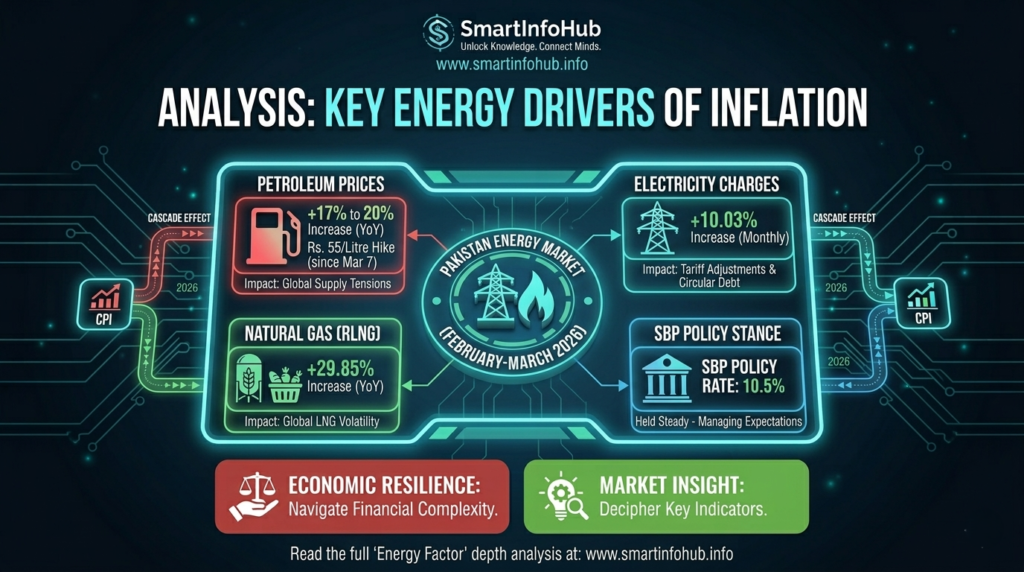
Price Hike: Rs 55 per litre (Implemented March 7, 2026).
New Rate: Petrol is approximately Rs 321.17, and Diesel is Rs 335.86.
Cause: Massive global volatility due to Middle East tensions (US-Israel vs. Iran conflict).
Impact: Transport costs are projected to rise significantly, creating a “ripple effect” on food prices.
2. Electricity & Gas Updates
Electricity: Prices increased by 10.03% recently due to tariff adjustments and circular debt management.
Gas (RLNG): Year-on-year gas charges for the lowest consumption tier remain up by 29.85%.
LPG: Prices rose by 5.61% in just the first week of March.
3. Central Bank Response
SBP Policy Rate: Held steady at 10.5% (Decision made on March 9, 2026).
Strategy: The State Bank is maintaining a high rate to control “inflationary expectations” caused by these rising energy costs.
4. The Inflation Outlook
The Food Price Equation
Food inflation is a critical concern, particularly for the low- and middle-income segments of the population, given that food accounts for a significant portion of their expenditures. The latest data highlights the persistent challenges in managing food prices:
Key Food Price Indicators
Understanding the dynamics within the food sector is key to developing effective policies. The data points to a mixed picture:
Perishable vs. Non-Perishable Food: While non-perishable items like grains and pulses ( 0.3%) showed relative stability, perishable items (⬆️ 7.0%) like fresh fruits and vegetables experienced significant price swings, often driven by seasonal factors and supply chain issues.
Essential Commodities: Close monitoring of essential commodities like sugar, wheat flour, and edible oil is crucial, as price increases in these items directly impact food security.
Policy Responses and Challenges
Addressing food inflation requires a multi-pronged approach, focusing on enhancing agricultural productivity, improving supply chain efficiency, and implementing effective market regulation. Governments often utilize tools like strategic grain reserves and targeted subsidies to stabilize prices, though sustainable solutions necessitate structural reforms.
The Role of the State Bank
The State Bank of Pakistan (SBP) plays a pivotal role in managing inflation, utilizing monetary policy tools to maintain price stability. The CPI data is a crucial input in the SBP’s decision-making process, influencing its outlook on the appropriate policy rate:
Monetary Policy Stance
The SBP continuously assesses the inflation outlook to determine the most effective monetary policy stance. The central bank’s primary objective is to achieve and maintain low and stable inflation.
Policy Rate Implications: High inflation figures often lead to a tightening of monetary policy, typically through increases in the policy rate. This aims to curb demand and anchor inflation expectations.
Balancing Act: The SBP faces the challenge of balancing the need to control inflation with supporting economic growth. While raising interest rates helps in managing inflation, it can also slow down economic activity.
Future Outlook and Considerations
The SBP will closely monitor the trajectory of key inflation drivers, particularly energy prices and food inflation, in the coming months. The central bank will likely adopt a data-driven approach, adjusting its monetary policy stance as necessary to achieve its inflation targets and maintain financial stability.
Building Economic Resilience
Navigating a complex and volatile economic landscape requires resilience at both macro and micro levels. While structural reforms are essential for long-term economic stability, businesses and individuals can also take proactive steps to enhance their financial resilience:
Macro-Level Resilience
Structural Reforms: Addressing long-standing structural weaknesses in the energy and agriculture sectors is paramount for achieving sustainable economic growth.
Fiscal Discipline: Maintaining fiscal discipline and reducing the budget deficit can help in managing inflationary pressures.
Foreign Exchange Stability: Ensuring stability in the foreign exchange market is critical for managing import costs and reducing external vulnerabilities.
Micro-Level Strategies
Businesses: Adapting pricing strategies, optimizing supply chains, and diversifying revenue streams can enhance business resilience.
Individuals: Managing finances effectively, prioritizing essential expenditures, and seeking financial advice can help individuals navigate high-inflation environments.
The Path Forward
Achieving long-term economic stability is a shared responsibility, requiring concerted efforts from policymakers, businesses, and citizens. By understanding the underlying drivers of inflation, developing effective policy responses, and enhancing resilience at all levels, Pakistan can build a more robust and prosperous economy.